
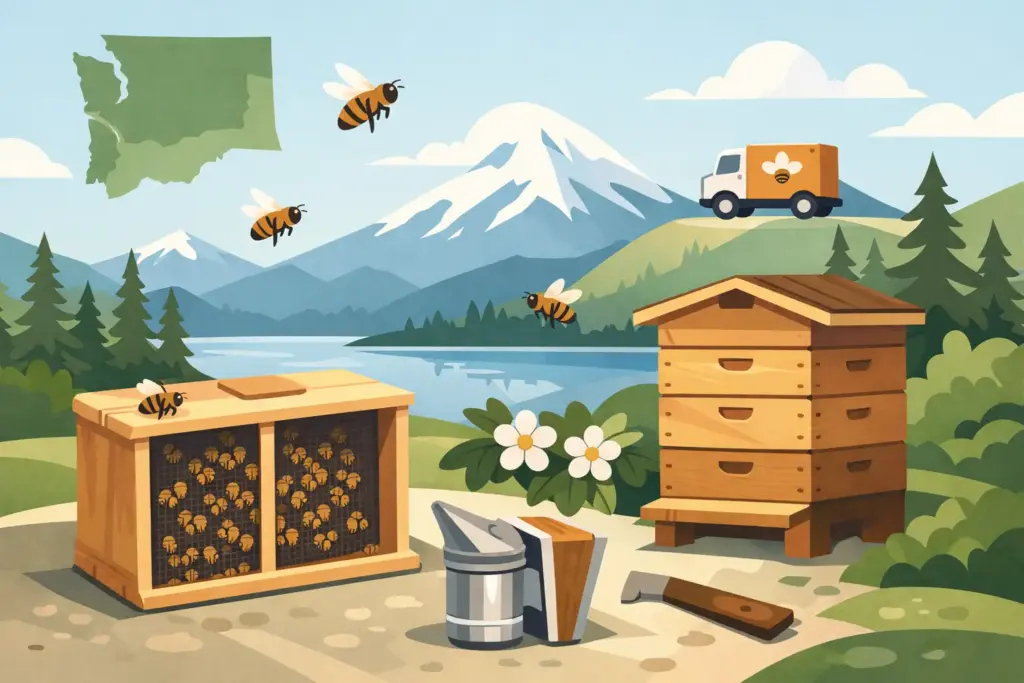
A bee package is not a box you order on Friday because the weather looks good for the weekend. It is a live colony start with a narrow pickup window, a queen that needs to be accepted, and thousands of bees that need a ready hive the same day. If you are deciding where to buy bee packages, start with the supplier’s bees, pickup process, and local support – not the lowest price on a search result.
For beekeepers in Northwest Washington and the wider Pacific Northwest, spring can arrive in fits and starts. A dependable source will help you plan around that reality, provide clear availability information, and tell you what is included in the package before pickup day.
Where to Buy Bee Packages Near You
The best place to buy a bee package is usually a reputable regional apiary or beekeeping supplier that offers scheduled local pickup. Local pickup matters because packages are live bees. Every extra transfer, delay, or hot day in transit adds stress. Picking up close to home also gives you a clear person to contact if there is a question about the queen, installation, or early colony development.
A local supplier should be able to tell you the package weight, queen type, expected pickup dates, and whether the queen is marked. A standard three-pound package contains roughly 10,000 bees plus a mated queen in a small queen cage. That is enough population to establish a colony, but it is not a finished hive. The bees need food, comb-building space, and regular checks during their first weeks.
Buying from a regional bee business can also make replacement parts and follow-up supplies easier to get. A new package commonly needs syrup, an entrance reducer, extra frames, and later, a second brood box or honey super. If the colony needs a queen replacement or mite treatment later in the season, it helps to work with someone who stocks the basics and understands the local timing.
Les’s Bees serves local beekeepers with three-pound packages, nucs, queens, equipment, and direct practical guidance, which is especially useful when a first package does not go exactly as planned.
Local apiaries and bee suppliers
For most new beekeepers, this is the strongest first option. Ask whether the supplier raises the bees, brings them in from another producer, or does both. Imported package bees are common in northern states because early-season bee demand is high. That does not automatically make them poor bees. It does mean you should ask how they are handled after arrival and what support is available once you take them home.
Healthy-looking bees at pickup are only one part of the equation. You also want a supplier that communicates clearly if weather, transport, or queen availability changes the delivery date. Spring livestock does not run on a perfect retail calendar. Good suppliers set expectations early rather than leaving customers guessing.
Local beekeeping associations and mentors
County and regional bee clubs are useful for finding sources that local keepers have actually used. Members can tell you whether packages arrived on time, whether queens were laying well, and whether the supplier answered the phone when someone needed help.
Treat recommendations as a starting point, not a substitute for your own questions. A package that did well in a sunny, sheltered yard may need more feeding and wind protection in an exposed Whatcom County location. Ask experienced local beekeepers what they would buy again and why.
Mail-order packages and distant sellers
Mail-order bees may be the only option in some areas, and established sellers can ship packages successfully. Still, this route has trade-offs. Shipping adds handling and weather exposure, and resolving a problem can take longer when the seller is several states away. You may also be working around a delivery date rather than choosing a calm, mild day for installation.
If you buy from a distant seller, read the live-arrival policy before placing the order. Find out how quickly you must report a problem, what evidence they require, and whether they offer a replacement, a credit, or neither. Never assume a live-bee purchase works like a returnable tool or hive component.
Package Bees or a Nuc: Choose the Right Start
A package is often less expensive than a five-frame nucleus colony, and it gives you a clean start on your own frames and foundation. It is a good choice for a beekeeper who has a fully assembled hive, can feed consistently, and is prepared to monitor queen release and early brood production.
A nuc costs more because it includes an established laying queen, brood at multiple stages, food stores, and drawn comb. That head start can be valuable in the Pacific Northwest, where a wet or cool spring can slow package buildup. A nuc often expands faster, but it still needs careful mite monitoring, enough space, and timely feeding when forage is thin.
There is no universal winner. Choose a package if budget, availability, and the experience of building a colony from the ground up fit your goals. Choose a nuc if you want a more established colony and a better chance of building enough strength for the local nectar flow. In either case, productive queens and timely management matter more than the label on the box.
Questions to Ask Before You Reserve Bees
Reserve early. Bee packages commonly sell out well before spring, and waiting for consistently warm weather can mean missing the pickup window entirely. Before you put money down, get straight answers on these points:
- What is the package size, and does the price include a mated queen?
- Is the queen marked, and what genetics or stock is she?
- What is the expected pickup date, time, and location?
- What happens if weather or transport delays the bees?
- What is the supplier’s policy if the queen is dead or not accepted?
- What equipment and feed should be ready before pickup?
You do not need a long sales pitch. You need specific details. A seller who cannot explain what is in the package, when it will be available, or how to handle a queen issue is not making your first season easier.
Queen genetics are worth asking about, but avoid treating a breed name as a guarantee. Carniolan-type bees, Italian bees, and local crosses can all perform well under proper management. Temperament, wintering, honey production, and swarming behavior are influenced by the queen, drones, weather, forage, mites, and how the colony is managed. Good stock gives you a better starting point. It does not remove the need to inspect and manage the hive.
Get the Hive Ready Before Pickup Day
Do not bring bees home to a hive that is still in boxes in the garage. Assemble and level the hive first. Install the frames, reduce the entrance if conditions are cool, and make sure the hive is stable and protected from livestock, pets, and foot traffic.
Have a feeder and fresh sugar syrup ready. A package has no drawn comb and limited stores, so feeding is usually part of the startup plan, especially during cold, wet spells or weak early nectar flows. The exact feeding schedule depends on weather, forage, and colony progress, but stopping too early can slow comb building. Feeding without checking can create different problems, including syrup stored where you hoped the queen would lay. Open the hive regularly enough to see what is happening.
You will also need a smoker, veil or suit, hive tool, and a calm plan for installation. Install near dusk or during mild weather when possible. Set the queen cage correctly according to the supplier’s instructions, give the bees time to orient, and avoid repeatedly opening the hive in the first few days just to see whether they are still there.
What a Good First Month Looks Like
After installation, confirm that the queen has been released or release her as directed. Then look for eggs and young larvae on your next appropriate inspection. Seeing eggs is stronger evidence of a functioning queen than seeing her herself. New beekeepers often spend too much time trying to spot the queen and not enough time reading the brood pattern, food stores, and colony behavior.
A package should begin drawing comb and raising brood when weather and food allow. Progress will not be identical in every hive. Cool rain, a weak queen, robbing pressure, pesticide exposure, or poor nutrition can slow a colony down. That is why buying locally is only the first decision. The next one is whether you will stay engaged with the hive.
Start mite monitoring early enough to understand what is happening before the colony becomes large. Varroa is not a late-summer problem only. A package may arrive with fewer mites than an overwintered colony, but it is not automatically mite-free. Use a reliable testing method, keep records, and choose treatments that fit the season and label directions.
The right bee package supplier gives you more than a screened box of bees. They give you clear timing, healthy stock, honest answers, and a practical place to turn when your colony needs attention. Buy early, prepare the hive before pickup, and make your first inspection plan before the bees ever come home.