
The decision to buy a bee colony is one of the most exciting steps for any new beekeeper. But let’s be honest, it can also feel confusing. You hear experienced keepers talking about ‘nucs’ and ‘packages,’ and it’s hard to know what those terms even mean, let alone which one is right for your new hive. You might worry about getting healthy bees or wonder what you’re supposed to do with them once they finally arrive. I see these questions come up all the time.
I want to take all the guesswork out of it for you. This guide provides clear, straightforward answers to help you get started with confidence. We will cover the two main ways to get your bees: a nucleus colony (nuc) and a package. I’ll explain exactly what comes in each order, what to look for to ensure you receive a quality colony, and the first steps to take when you get your bees home. My goal is to make sure you feel prepared to start your beekeeping journey on the right foot. Your success is my priority.
What is a ‘Bee Colony’ When You’re Buying One?
When you first decide to buy a bee colony, you are not purchasing a towering, mature hive full of honey. Instead, think of it as a ‘starter kit’—a core group of bees ready to establish a new home in your equipment. Understanding what you’re getting when you buy a bee colony is the first and most exciting step in your Beekeeping (or apiculture) journey. Getting this first step right is key to a successful season.
There are two primary ways to buy a bee colony, each with its own benefits. Understanding the difference between a Nucleus Colony and a Bee Package will help you make the best choice for your new apiary.
Nucleus Colonies (Nucs): A Miniature, Functioning Hive
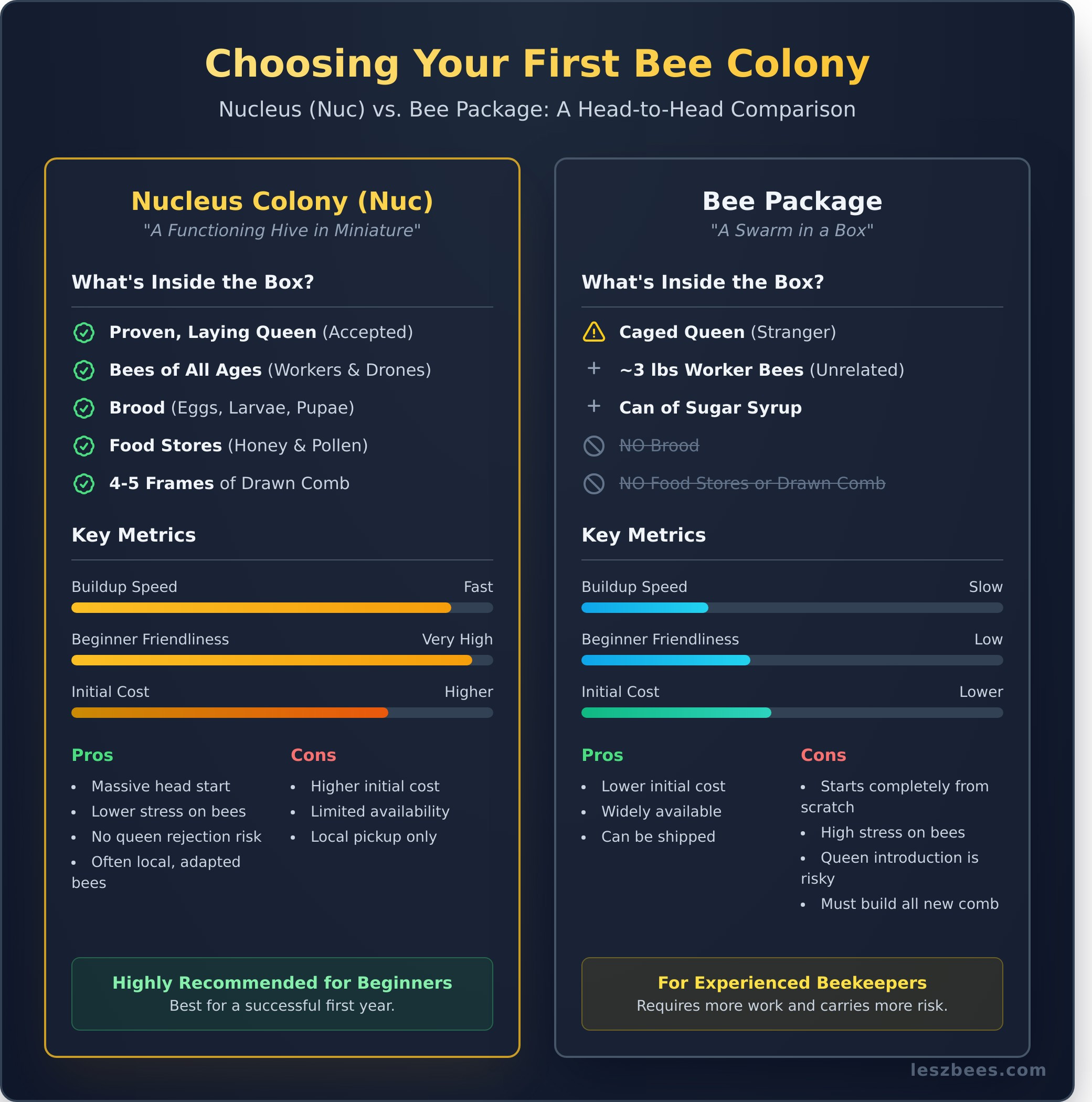
A nucleus colony, or ‘nuc,’ is often the best option for new beekeepers who want to buy a bee colony. It is a small, established colony on 4 or 5 frames, taken directly from a larger, healthy hive. A quality nuc from a local source gives you a strong head start because it includes:
- A proven, laying queen
- Worker bees of all ages
- Drones (male bees)
- Brood (eggs, larvae, and pupae)
- Food stores of pollen and honey
Because a nuc is already a functioning family unit, the bees can get to work immediately. They are typically sourced from local beekeepers, meaning the bees are already adapted to your climate.
Bee Packages: A Swarm in a Box
A bee package is essentially a screened box filled with about two to three pounds of loose, unrelated bees and a separate, caged queen. Unlike a nuc, a package has no frames, no brood, and no food stores. You are truly starting from scratch. You must introduce the queen to the colony, and the bees need to build all their wax comb before she can begin laying eggs. Packages are often shipped from large apiaries in southern states, which can be stressful for the bees.
While nucs and packages are the most common ways to buy a bee colony, there is a third option: purchasing a full, established hive from another beekeeper. This is less common for beginners as it requires moving a heavy, fully populated hive and comes at a much higher cost. For your first year, starting with a nuc is the most practical path to success.
The Anatomy of a Nucleus Colony (Nuc): Your Hive’s Head Start
When you decide to buy a bee colony, you have a few options. A nucleus colony, or “nuc,” is a small, established hive. It’s not just a box of bees; it’s a complete, functioning colony with a proven queen, worker bees, and resources. Starting with a nuc gives your hive a significant head start, reducing the initial stress on the bees and increasing your chances of success in the first year.
At Les’s Bees, we specialize in high-quality, local nucs for this very reason. We believe in setting new beekeepers up for success. Our nucs are built on five deep frames, featuring bees with local genetics that are already adapted to our Pacific Northwest climate, making them more resilient through our wet springs and mild winters.
What’s on the Frames?
A nuc contains everything a colony needs to expand rapidly once installed in a full-sized hive. You will find:
- Frames of Brood: You’ll see the queen’s work firsthand, with eggs, developing larvae, and capped pupae in various stages. This is the next generation of your workforce.
- Frames of Food: The bees come with their own pantry of stored honey for energy and pollen (bee bread) for protein to feed the young.
- Drawn Comb: The bees have already built out the wax comb on the frames, a task that requires a huge amount of resources. This allows the queen to continue laying and the colony to expand without delay.
The Proven Queen Bee
The single most important bee in the hive is the queen. A nuc comes with a queen who is already accepted by the colony and is actively laying eggs. You can inspect her brood pattern—a tight, consolidated patch of eggs and larvae—which is a key indicator of her health and vitality. This completely eliminates the risk of a new colony rejecting a queen, a common problem when installing packages or nucs from other sources. Our nucs feature marked, productive New World Carniolan queens, known for their gentle nature and rapid spring buildup.
Pros and Cons of Starting with a Nuc
Choosing how you buy a bee colony involves weighing the benefits and drawbacks. A nuc is a fantastic choice, but it’s important to know both sides.
- Pros: A nuc offers a much faster buildup, puts less stress on the bees, and includes a proven, laying queen. Your hive will be stronger, healthier, and more productive from day one.
- Cons: The initial cost is higher than a package of bees. Nucs also have limited availability and are typically for local pickup only due to their established nature.
We believe the advantages of a quality, local nuc far outweigh the costs for a new beekeeper. Check availability of our Whatcom County nuc colonies.
Understanding Bee Packages: A Different Way to Start
If you decide to buy a bee colony as a package, you are essentially starting from scratch. A bee package is a screened wooden box filled with a loose swarm of bees and a queen. It’s your job to give them a home and help them build their new colony from the ground up. This method requires more work from the bees and careful attention from you, the beekeeper.
What’s Inside the Box?
A standard 3-pound package contains a simple but effective kit to start a hive. You get no frames, no honeycomb, and no baby bees (brood). It is just the basics to get you started.
- Worker Bees: Approximately 10,000-12,000 bees ready to work.
- Mated Queen: A young, healthy queen housed separately in a small cage.
- Feeder Can: A can of sugar syrup to feed the bees during their journey to you.
The Queen Introduction Process
The most critical step with a package is introducing the queen. She is not the mother of these worker bees; they are a mix from several hives. To them, she is a stranger. Her cage has a small hole plugged with a sugar candy. You will remove the cork on that end and place the cage in the hive. The worker bees will eat through the candy to release her over several days. This slow introduction gives the bees time to accept her scent, or pheromones, and recognize her as their new leader. Success is not guaranteed, and a rejected queen means your colony will fail without quick intervention.
Pros and Cons of Starting with a Package
Choosing a package is a popular way to buy a bee colony, but it’s important to know the trade-offs.
Pros: Packages are generally less expensive than other options, like nucs. They are also lightweight and can be shipped long distances, making them widely available from suppliers across the country.
Cons: The colony has a slower start since they must build all their wax comb from scratch before the queen can begin laying eggs. This intensive building period requires a strong nectar flow or consistent feeding. Understanding the fundamentals of seasonal management of honey bees is vital to ensure they have the resources they need. There is also a higher risk of the colony failing if the queen is not accepted, and the installation process can be more difficult for a new beekeeper.
From Order to Apiary: The Process of Buying and Installing Your Bees
You’ve done the research and purchased your equipment. Now comes the most exciting part: bringing your bees home. The process is straightforward, but timing and preparation are critical for success. This guide walks you through securing your bees and getting them settled into their new hive.
Ordering Your Bee Colony
Healthy, local bees are in high demand and supplies are always limited. When you’re ready to buy a bee colony, planning ahead is the most important step. Most suppliers, including us, begin taking pre-orders in the late winter and early spring for pickup in April or May. We typically require a deposit to reserve your bees, with the final payment due on pickup day. Once you place your order, we will notify you as soon as your bees are ready.
Picking Up and Transporting Your Bees
Pickup day is simple if you come prepared. Your goal is to get the bees home safely with minimal stress. Remember these key points for transporting a nucleus colony (nuc):
- Secure the box. Bring a screened travel box or ratchet straps to ensure your nuc box is sealed and stable for the drive.
- Provide ventilation. Keep air flowing in your vehicle, but avoid placing the bees in a direct draft from an open window or A/C vent.
- Stay out of the sun. Never leave your bees in a hot car or in direct sunlight. Overheating can quickly kill a colony.
- Install them promptly. Plan to install your bees into their permanent hive the same day you pick them up.
A Quick Guide to Installation
Before you leave to get your bees, make sure your hive equipment is fully assembled and set up in your chosen apiary location. When you get home, the process is simple. For a nuc, you will gently move the frames from the nuc box into your hive body. It is very important to keep the frames in the same order and orientation. This preserves the queen’s brood nest and makes the transition seamless for the colony. For a package of bees, the process involves gently shaking the bees into the hive and placing the caged queen between two frames.
Getting your first colony installed is a major milestone. We take pride in providing healthy, local bees to get you started right. You can view our available nucs and place your pre-order on our website.
Checklist: Are You Ready for Your Bee Colony’s Arrival?
You’ve made the decision to buy a bee colony. That is an exciting first step, but the real work begins before they arrive. Proper preparation is the most important factor for a smooth installation day. Having everything in place reduces stress on you and, more importantly, on your new bees. This checklist ensures your bees have the best possible start for survival and growth.
Essential Equipment on Hand
Your bees will need a home the moment they arrive. Do not wait until pickup day to assemble your equipment. Have the following items set up and ready at your apiary location:
- Complete Hive: A fully assembled bottom board, hive body (deep or medium), all 10 frames with foundation, an inner cover, and a telescoping top cover.
- Protective Gear: Your bee veil, jacket or full suit, and a good pair of beekeeping gloves.
- Basic Tools: A hive tool for prying frames and a smoker with plenty of fuel (like pine needles or cotton).
- Feeder and Food: A feeder filled with 1:1 sugar syrup. This is especially critical for package bees, which have no stored food.
Location and Timing
Where and when you install your bees matters. Your chosen apiary site should be prepared, with a level hive stand ready to go. Plan your installation carefully. It is best to install a new colony in the late afternoon or early evening. This timing encourages the bees to stay inside and orient themselves to their new home overnight. Always check the weather forecast. A calm, dry, and mild day is ideal for the installation.
Why Buying Local Matters
When you buy a bee colony, purchasing from a local source gives you a significant advantage, especially in the Pacific Northwest. Local bees are already adapted to our specific climate and forage. This means they are better prepared for our wet springs and unique nectar flows.
Buying local also reduces the immense stress of long-distance shipping, resulting in a healthier, stronger colony from day one. You are also supporting other local beekeepers and strengthening our community. At Les’s Bees, we specialize in bees and queens raised right here for our climate. We provide everything you need to keep healthy bees.
Start Your Beekeeping Journey with Confidence
You now know the key differences between a nucleus colony and a bee package, what to expect during the ordering process, and how to prepare for arrival. A nuc gives your hive a powerful head start with an established queen and brood, but being ready with your equipment is crucial for success. When you decide to buy a bee colony, choosing a trusted, local supplier is the most important step you can take.
At Les’s Bees, I personally select high-quality products to ensure you get healthy, productive bees. As your local source for beekeeping in Whatcom & Skagit County, I stand by my colonies. Your satisfaction is guaranteed.
Ready to get started? Give your apiary the best foundation for a successful season.
Order your local nucleus colony for the spring season.
We’re here to help you get started on the right foot. Happy beekeeping!
Frequently Asked Questions
When is the best time to buy a bee colony in Washington state?
In Washington, the best time is spring, usually April and May. This gives your new bees the entire season to get established before winter arrives. They can take full advantage of the spring nectar flow to build comb and raise brood. I schedule all my nuc pickups for this ideal window to ensure you get a strong, healthy start for your first year of beekeeping.
How many bees are in a typical nuc or package?
A standard 3-pound package contains roughly 10,000 to 12,000 bees plus a caged queen. A 5-frame nuc has a similar population but is a complete, miniature hive. It includes a laying queen, worker bees, drones, and frames of brood, honey, and pollen. I recommend nucs for beginners because they are already a functioning colony and build up much faster than a package.
What kind of bees should a beginner buy?
For your first hive, I recommend Italian or Carniolan bees. Both are known for their docile nature, which makes hive inspections much less stressful for a new beekeeper. They are also excellent honey producers and build up their populations quickly in the spring. These traits make them very forgiving and a great choice for learning the craft. Stick with these gentle bees to build your confidence.
Do I need to buy a hive before I buy my bees?
Yes. You must have your hive equipment fully assembled and placed in its permanent location before you bring your bees home. Whether you buy a bee colony in a nuc or a package, they need to be installed into their new home immediately. Waiting can stress the bees and cause problems. I carry a full line of quality woodenware, so you can get everything you need in one place.
How do I safely transport a nucleus colony in my car?
Transporting a nuc is simple and safe. My nuc boxes are secure, with a screened entrance for ventilation that keeps the bees inside. Place the box on a flat surface in your car, like the floor or trunk, ensuring it cannot slide or tip over. Keep the car cool and ventilated, but do not point A/C vents directly at the box. Drive carefully, and your bees will travel just fine.
Can I buy just a queen bee for an existing colony?
Yes, I sell mated queens for beekeepers who need to requeen a hive. You may need a new queen if your current one is failing, is lost, or if you want to change the genetics of your colony. Introducing a new queen must be done carefully to ensure the hive accepts her. It is a common and important management task for any beekeeper to master.
What is the difference between a 5-frame nuc and a 10-frame hive?
A 5-frame nuc is a starter colony. It is a small, established hive with a laying queen and 5 frames of bees, brood, and food. A 10-frame hive is the full-sized equipment your bees will live in. When you buy a bee colony as a nuc, you place those 5 frames into a 10-frame box, and the bees will expand to fill the entire space. The nuc is the engine; the hive is the house.