When you start looking at beehives for sale, the options can feel overwhelming. Langstroth, Top Bar, 8-frame, 10-frame—it’s a lot to sort through. Many new beekeepers worry they’ll make an expensive mistake before their first bee even arrives. You just want to find a quality hive that sets you and your bees up for success, without the confusion or the high price tag you see at the big online stores.
That’s why I put this guide together. My goal is to give you the direct, practical information you need to make a smart choice. We will break down the real differences between the most popular hive styles so you can see the pros and cons for yourself. You will learn exactly what components are essential in a starter kit and how to confidently choose the right size for your goals. Let’s get you ready to pick the perfect home for your new colony.
Understanding the Main Types of Beehives for Sale
Choosing your first beehive is the most important decision you will make as a new beekeeper. The market has many different beehives for sale, and each type comes with its own management style, philosophy, and cost. Before you buy, it is important to understand what is a beehive in the modern sense: a man-made structure designed to house a honey bee colony. We will break down the most popular options to help you find the right fit. Always consider your personal goals and physical ability as you review each type.
The Langstroth Hive: The Industry Standard
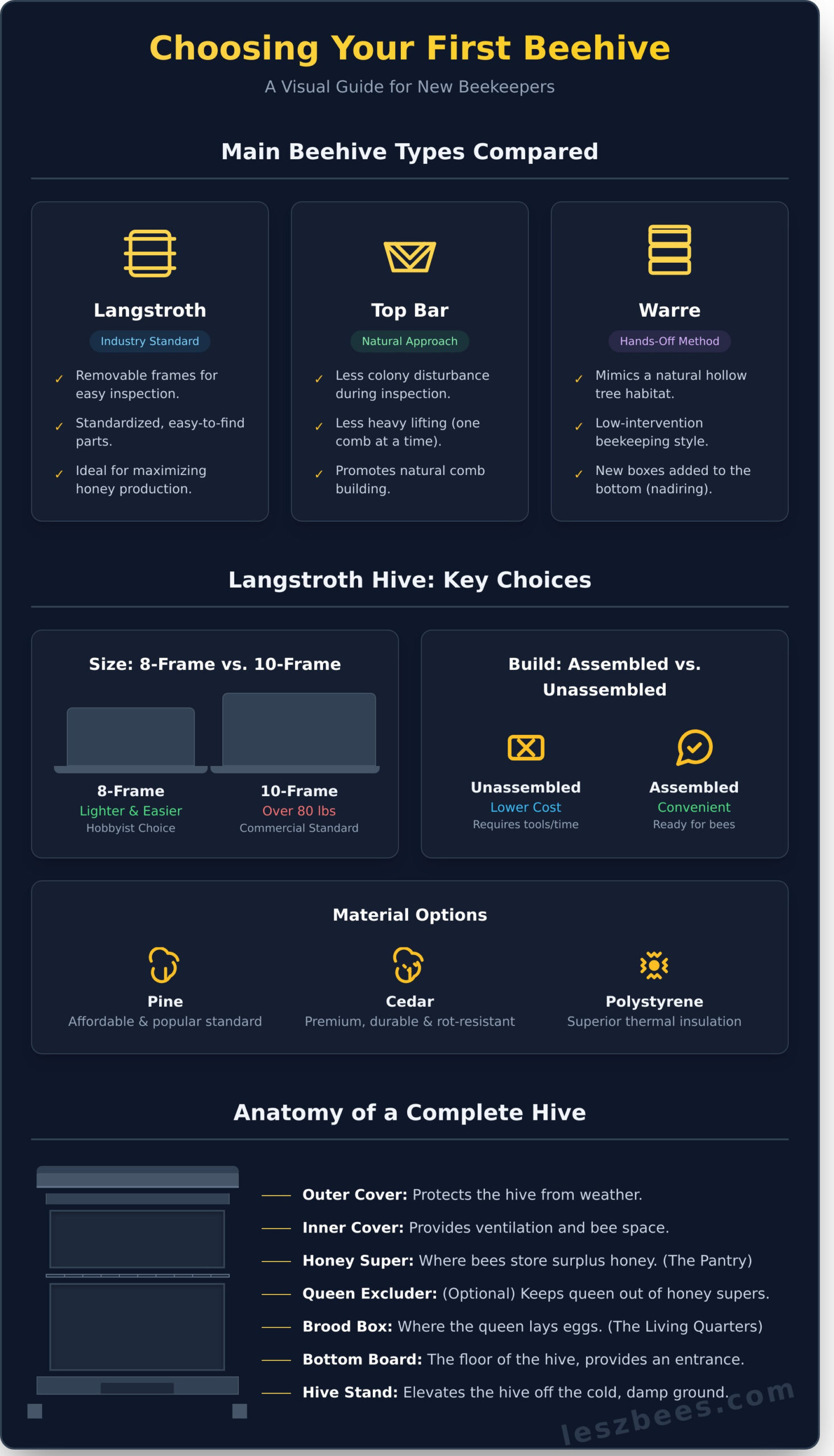
The Langstroth is the most common hive in North America for a reason. Its design is simple, effective, and standardized, making it a practical choice for beginners and commercial apiaries alike.
- Features removable frames for easy inspection and management.
- Standardized parts make finding replacement equipment simple and affordable.
- Ideal for beekeepers focused on maximizing honey production.
The Top Bar Hive: A More Natural Approach
For those who prefer a less intrusive method, the Top Bar Hive is a great choice. It is a single, long box where bees build their comb naturally from a wooden bar, without foundation.
- Beekeepers inspect one comb at a time, causing less disturbance to the colony.
- Requires less heavy lifting than a Langstroth, as you only lift one comb.
- Popular with those practicing treatment-free or natural beekeeping.
The Warre Hive: The Vertical Top Bar
The Warre Hive, often called the “vertical top bar,” is designed to mimic a hollow tree. Bees build their comb downwards, just as they would in nature. This hive is best for a hands-off approach.
- Considered a low-intervention style of beekeeping.
- Management involves adding new boxes to the bottom of the stack (“nadiring”).
- Honey is harvested by removing the top box, which is filled first.
Specialty Hives: Flow Hives & Thermally Superior Hives
When looking at different beehives for sale, you will also see specialty options. Flow Hives allow you to harvest honey with a tap, minimizing disturbance but at a much higher cost. Thermally superior hives, like the HiveiQ systems I carry, use insulated materials to help bees regulate temperature. This is a key advantage for colony health in climates with harsh winters or hot summers, like here in the Pacific Northwest.
Key Decisions: 8-Frame vs. 10-Frame and Material Choices
Once you decide on a hive type, like the Langstroth, you have more choices to make. These next steps are critical, as they affect the weight you’ll be lifting, the hive’s durability, and your startup costs. When you browse beehives for sale, you’ll need to choose a size, material, and assembly option that fits your goals and budget. Thinking through these details now will save you time and money later.
The Great Debate: 8-Frame vs. 10-Frame Langstroth Hives
The most common question from new beekeepers is whether to use 8-frame or 10-frame equipment. The 10-frame hive is the traditional commercial standard, offering more space for the queen to lay eggs and for workers to store honey. However, a full 10-frame deep box can weigh over 80 pounds. The 8-frame hive is lighter and easier for a single person to lift, making it a popular choice for hobbyists. The most important rule is consistency: once you pick a size, all your boxes, bottoms, and tops must match.
Wood vs. Polystyrene: Which Hive Material is Best?
The material your hive is made from impacts insulation, durability, and maintenance. Here are the most common options:
- Pine: The most popular and affordable choice. Pine is a sturdy wood that provides good value, but it must be painted or sealed to protect it from the weather.
- Cedar: A premium wood that costs more but offers excellent natural resistance to rot and insects. Many beekeepers choose cedar for its durability and attractive appearance.
- Polystyrene: High-density polystyrene hives offer superior thermal insulation. This helps your bees stay warmer in the winter and cooler in the summer, reducing colony stress and leading to a faster buildup in the spring.
Assembled vs. Unassembled: Weighing Cost and Convenience
Your final choice is between buying a pre-built hive or an unassembled kit. Unassembled beehives for sale are cheaper but require your time, tools, and effort to build. Assembling your own gear is a great way to learn how every piece fits together. For beginners, however, an assembled hive is often the best choice. It arrives ready for paint and bees, which reduces initial stress. Many beginner beekeeping tips recommend starting with assembled equipment so you can focus on learning about your bees, not your carpentry skills.
What’s Inside? Anatomy of a Complete Beehive Kit
A complete beehive looks like a simple stack of boxes, but each part has a critical job. Understanding these components is essential when you are looking at beehives for sale. It helps you know exactly what you’re buying and why each piece matters for the health of your colony. Most quality starter kits will include these essential parts. We’ll break it down from the ground up.
The Foundation: Bottom Board, Entrance Reducer, and Hive Stand
Everything starts with a solid base. A hive stand elevates the entire hive off the damp, cold ground, which improves hive health and makes it easier for you to work. The bottom board serves as the floor. Many beekeepers prefer a screened bottom board for better ventilation and as a simple way to monitor for varroa mites. Finally, the entrance reducer is a small piece of wood that limits the size of the hive entrance, making it easier for a new or small colony to defend itself from robbers and pests.
The Living Quarters: Brood Boxes and Frames
The largest boxes in the stack are the brood boxes, also called hive bodies. This is the heart of the colony—where the queen lays her eggs and the nurse bees raise the next generation of bees. Inside each box are frames that hold foundation, which gives the bees a guide for drawing out uniform beeswax comb. For a deeper dive into hive components, the guide from Penn State’s Beekeeping Basics is an excellent resource for new beekeepers. A new hive typically starts with one or two brood boxes.
The Pantry: Honey Supers and Queen Excluder
Above the brood boxes, you’ll place honey supers. These are shallower boxes where the bees will store surplus honey—the honey you get to harvest. To keep the honey pure, many beekeepers use a queen excluder. This is a flat metal or plastic grid placed between the brood boxes and the honey supers. The slots are large enough for worker bees to pass through but too small for the queen, ensuring your honey frames are free of eggs and larvae.
The Roof: Inner Cover and Outer Cover
To top it all off, the hive has two covers. The inner cover sits directly on the top box, providing an insulating air space and ventilation. It often has a notch that can be used as an upper entrance. The outer cover, or telescoping cover, is the final roof. It fits over the top of the hive and protects the colony from rain, snow, and sun. A good tip is to place a heavy rock or brick on top to keep it secure during high winds.
When you’re ready to start, getting a complete kit is the easiest way to ensure you have all the essential parts. See our complete, quality woodenware hive kits.
Where to Buy Your First Hive: Local Experts vs. Online Retailers
You’ve learned about the different types of hives and the essential components. Now, you’re ready for the final step: making your purchase. The big question is where to find the best beehives for sale. You can click “add to cart” on a massive online retail site, or you can connect with a local bee supply store. While online shopping offers convenience, the value a local expert provides—especially for a new beekeeper—is unmatched.
The Benefits of Buying from a Local Supplier
Building a relationship with a local supplier is one of the smartest moves a new beekeeper can make. It’s about more than just a transaction; it’s about setting yourself up for success. The advantages are clear:
- Hands-On, Local Advice: Get practical tips tailored to our specific Pacific Northwest climate, from winterizing to managing moisture—advice you won’t get from a warehouse in another state.
- See Before You Buy: Feel the quality of the wood and check the fit of the joints in person. There are no surprises when you get your equipment home.
- Emergency Supplies: Realize you need a frame feeder or a new hive tool on a Saturday morning? A local shop is your lifeline for getting supplies quickly.
- Support a Fellow Beekeeper: Your purchase supports a local business and strengthens the beekeeping community you are now a part of.
What to Look for in a Bee Supply Store
A great local source is a partner in your beekeeping journey. When you visit, look for high-quality wood with tight, precise joints that will last for years. Ensure they stock a complete range of supplies you’ll need down the road, from smokers to protective gear. Most importantly, a good supplier is a source of knowledge and community. Ask other local beekeepers for recommendations—their experience is your best guide.
Why Les’s Bees is Your Trusted Source in Bellingham
Here at Les’s Bees, I combine the quality you demand with the local expertise you need. I’m not just a reseller; I’m a beekeeper who understands the unique challenges of keeping bees in Washington. When you’re looking for quality beehives for sale, I can help.
- Quality I Stand Behind: I personally select every piece of equipment I sell. If I wouldn’t use it in my own apiary, I won’t sell it to you.
- Affordable Start: I take pride in keeping my prices low to help you get started without breaking the bank.
- Practical, Local Advice: Get answers that work for our climate. Your success is my goal.
- Your Satisfaction is Guaranteed: When you shop with me, you get quality equipment and a commitment to helping you succeed.
Ready to get started? Shop my selection of quality woodenware today.
Your First Hive: The Start of a Great Adventure
Choosing your first beehive comes down to a few key decisions. Remember to select a hive type that fits your beekeeping style, decide between an 8-frame or 10-frame system, and understand the components of a complete kit. This knowledge puts you in a great position to give your new colony the best possible start.
When you are ready to find quality beehives for sale, you don’t have to guess or overpay. As your local source for beekeeping supplies in Whatcom County, I personally choose every product I sell. I take pride in keeping my prices low, often much lower than the big online sellers, to help you succeed without breaking the bank.
Get started with the right equipment today. Shop our quality beehives and starter kits. Satisfaction guaranteed. Your rewarding journey into beekeeping is just beginning, and you’re ready for it.
Frequently Asked Questions About Beehives
How much does a beginner beehive cost?
A complete beginner beehive kit typically costs between $150 and $250. This price includes all the essential woodenware: the boxes, frames, foundation, and covers. The final cost depends on the quality of the wood and if you choose an assembled or unassembled kit. I work hard to keep my prices fair, often much lower than the big online sellers, so you can get a quality starter hive without overpaying. Always check what’s included to ensure you get a full setup.
Do beehives for sale come with bees?
No, the woodenware and the bees are sold separately. When you see beehives for sale, you are purchasing the physical structure for the colony. You will need to buy your bees separately, usually as a “nuc” (a small nucleus colony with a laying queen) or a “package” of bees. This separation ensures you can get the hive set up and ready before your bees arrive. I can help you find a quality, local source for bees.
How many beehives should a beginner start with?
I always tell new beekeepers to start with two hives instead of one. Having two colonies allows you to compare their progress and learn what a healthy, thriving colony looks like. If one hive becomes weak or loses its queen, you can use resources like eggs or brood from the stronger hive to help it recover. This simple strategy greatly increases your chances of success during your critical first year. It’s a small extra investment for a lot more security.
What other essential equipment do I need besides the hive?
Besides the hive itself, you need personal protective gear and a few basic tools. For protection, you will need a beekeeper’s suit or jacket with a veil, and a good pair of gloves. Your essential tools are a hive tool for prying apart boxes and a smoker to help keep the bees calm during inspections. These items are not optional; they are critical for working with your bees safely and effectively from day one.
Can I legally place a beehive in my backyard?
In most places, yes, but you must check your local rules first. Beekeeping regulations can vary by city, county, or even your homeowner’s association (HOA). Contact your local municipal office to ask about specific ordinances. They may have rules on hive location, how many hives you can have, or water source requirements. Following the rules and being a good neighbor is key to successful backyard beekeeping.
Is it hard to assemble a beehive kit?
Assembling a beehive kit is a straightforward project, much like building simple furniture. Most of my unassembled kits come with pre-drilled holes and easy-to-follow instructions. You will only need basic tools like a hammer, wood glue, and a square to make sure your boxes are built strong and straight. If you prefer to save time, I also offer fully assembled hives ready for paint and bees.