The harvest is done, and your pantry is glowing with jars of pure, golden honey. You’ve put in the work, and now you have a quality product that friends and family love. But when you think about turning that liquid gold into actual honeybee sales, the questions start piling up. What are the local laws? How do you price it fairly but profitably? The entire process can feel intimidating, but it doesn’t have to be.
This guide is your straightforward plan for selling local honey. I’ll walk you through the essential steps to confidently and legally bottle, price, and market your raw honey. We will cover everything from choosing the right jars and designing a compliant label to building a small, local customer base that appreciates your hard work. By the end, you’ll have a professional-looking product and a clear path to turning your passion into a profitable venture.
From Hive to Jar: Preparing Your Honey for Sale
Before you make your first dollar, you need a product that people will trust and want to buy again. Successful honeybee sales begin in the hive and the honey house, not at the farmer’s market. A high-quality, professional product is your best marketing tool. It shows customers you care about your bees, your honey, and their satisfaction. This section covers the essential steps to turn your raw honey into a sale-ready item.
Clean Harvesting and Extraction
The quality of your final product starts with how you handle the frames. When pulling honey supers, use a fume board or bee brush to gently remove bees. Avoid using excessive smoke, which can taint the honey’s delicate flavor. The entire practice of Beekeeping (or apiculture) relies on attention to detail, and this is a critical step. Your equipment must be spotless. Stainless steel or food-grade plastic tools are non-negotiable for a saleable product.
For extraction, you have two main options. The crush-and-strain method is simple for small batches but can incorporate more wax and air. A centrifugal extractor is a bigger investment but provides cleaner honey more efficiently. No matter the method, ensure every surface the honey touches is clean to preserve its pure taste and appearance.
Choosing the Right Jars and Lids
Your container is the first thing a customer sees. It protects the honey and sells it at the same time. You need to choose what works best for your brand and your customers.
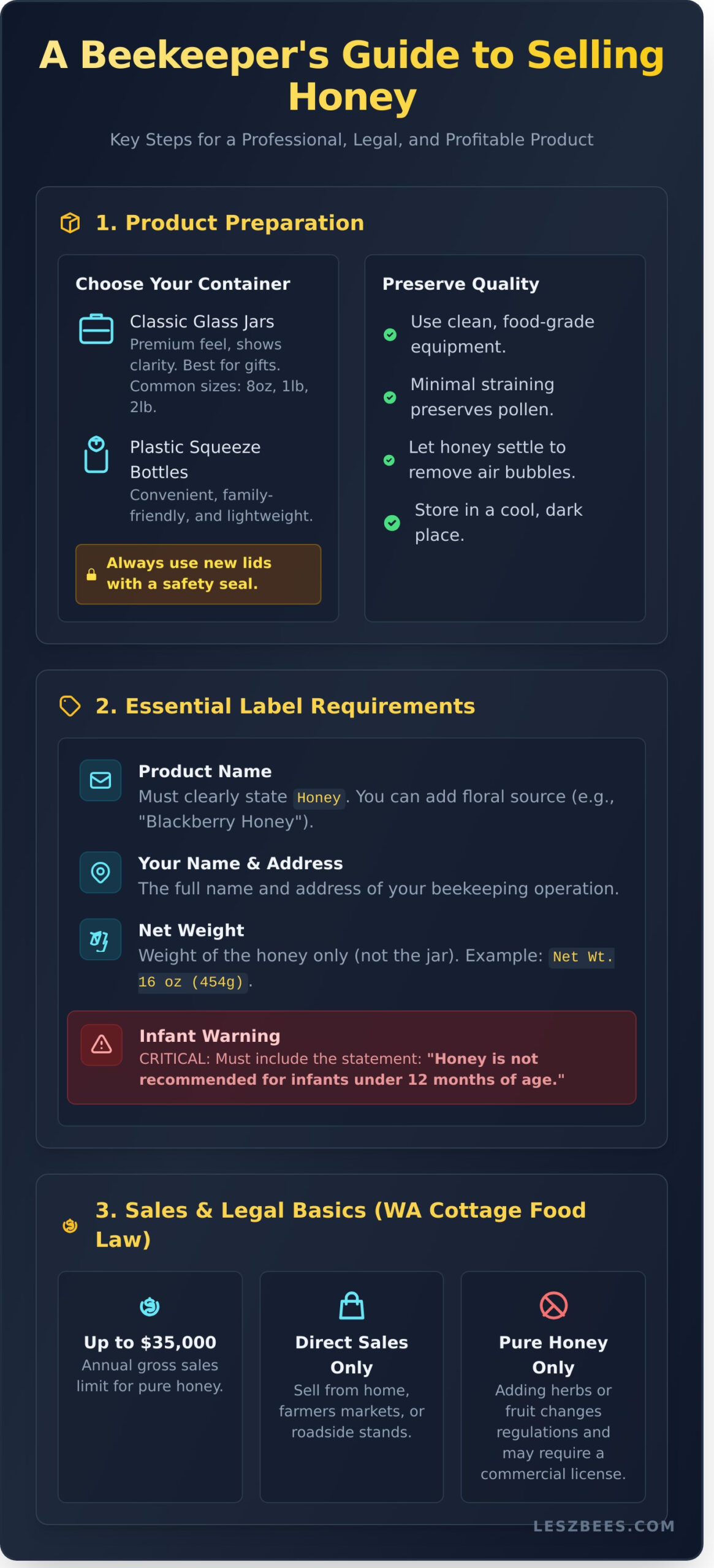
- Classic Glass Jars: These give a premium, traditional feel. Customers can clearly see the honey’s color and clarity. They are heavier and more fragile but are often preferred for gift-giving.
- Plastic Squeeze Bottles: These are practical, lightweight, and family-friendly. They are less expensive to ship and are popular for their convenience.
The 1 lb (16 oz) classic glass jar is often the best-selling size, but offering 8 oz and 2 lb options provides customers with more choice. Always use new, food-grade lids with a safety seal. This small detail tells your customer the product is safe, professional, and untampered with.
Bottling and Storing for Peak Quality
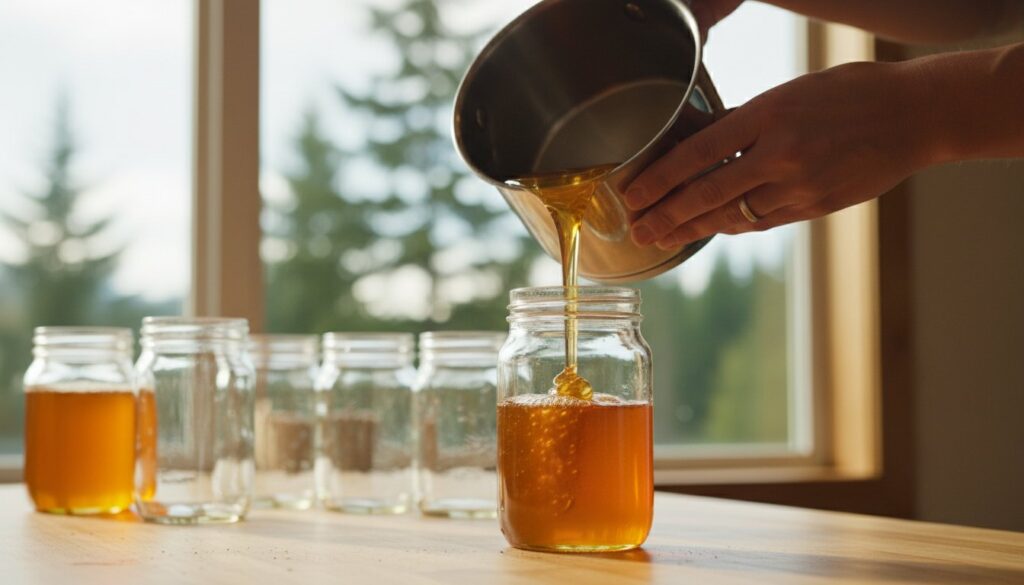
To prepare your honey for bottling, let it sit for a day or two after extraction. This allows air bubbles and fine wax particles to rise to the top. Skim this off before bottling. Use a simple, coarse strainer to remove large debris, but avoid fine filtering. Minimal straining preserves the natural pollen and enzymes that make local raw honey special. When bottling, tilt the jar and let the honey run down the inside wall. This simple trick prevents air bubbles and creates a beautiful, clear final product that boosts your honeybee sales potential. Once bottled, store your jars in a cool, dark place to maintain peak quality and prevent crystallization.
The Rules: Understanding the Legal Side of Honey Sales
Selling your raw honey is rewarding, but it’s also a business. As soon as you sell your first jar, you are selling a food product. That means you must follow specific rules to protect yourself and your customers. Getting these details right is not just about avoiding fines; it’s about building a trustworthy brand and ensuring your honeybee sales are successful and sustainable. Following the law shows you are a professional who cares about quality.
Navigating Washington’s Cottage Food Laws
For small-scale beekeepers, Washington State’s Cottage Food Operation laws are a great starting point. These rules are designed to help you sell certain low-risk foods, including pure honey, directly to consumers without needing a commercial kitchen. This makes getting started much easier. The laws do change, so it’s smart to stay updated by checking the official Washington State honey sale regulations for the latest details. Currently, you can sell up to $35,000 of honey per year from your home, at farmers markets, and at roadside stands. You will likely need a state business license, and it’s always a good idea to check with your city or county for local requirements.
Essential Honey Labeling Requirements
Proper labeling is the most important legal step. Your customers need to know what they are buying and who they are buying it from. Every jar of honey you sell must include a label with this specific information:
- Product Name: Clearly state that the product is “Honey.”
- Your Name and Address: The name and full address of your beekeeping operation.
- Net Weight: The weight of the honey itself, not including the jar (e.g., Net Wt. 12 oz).
- Infant Warning: The statement, “Honey is not recommended for infants under 12 months of age.”
You can also add optional details like the primary floral source (e.g., “Blackberry Honey”) or the harvest date to provide more value to your customers.
Food Safety and Best Practices
Your reputation is built on the quality and safety of your honey. Always process and bottle your honey in a clean, sanitary space free from pets and other contaminants. Keep detailed records of each batch you harvest, including the date and quantity. This helps with traceability. Be aware that if you add anything to your honey—like herbs, spices, or fruit—it is no longer considered a pure honey product. Infused honey falls under different regulations and may require a commercial food processing license.
Pricing Your Liquid Gold: How to Set a Fair Price
Setting the right price for your honey is one of the most important steps in your honeybee sales journey. It is much more than just a number. Your price communicates the value of your hard work and the premium quality of your local, raw honey. Never make the mistake of trying to compete with the mass-produced, ultra-filtered honey on supermarket shelves. Your product is superior, and your price must reflect that.
Calculating Your Cost of Production
Before you can set a price, you must know what it costs to produce each jar. This ensures you cover your expenses and make a fair profit. Be sure to account for everything to get an accurate number.
- Consumables: Jars, lids, and labels for each unit you sell.
- Equipment: A portion of the cost of your extractor, tanks, and other tools (amortization).
- Hive Management: The cost of feed, treatments, and any replacement queens or bees.
- Your Time: Your labor is valuable. Assign an hourly rate for hive inspections, harvesting, bottling, and selling time.
Add up your total costs and divide by the number of jars you produce. This gives you a clear cost-per-jar, which is your break-even point.
Researching the Local Market
Your honey isn’t sold in a vacuum. A little local research will help you find the pricing sweet spot. Visit farmers’ markets, farm stands, and local specialty food stores in your area. See what other beekeepers are charging for similar products. Take note of how prices vary for different sizes (e.g., 8 oz vs. 1 lb) and types of honey, such as a common wildflower versus a premium blackberry or sourwood honey. This information helps you position your product competitively without undervaluing it.
Common Pricing Strategies
Once you know your costs and the market rates, you can choose a pricing strategy. A common method is to price per ounce, which makes it easy for customers to compare value between different jar sizes. Many resources on Marketing and selling local honey suggest this as a solid starting point. Consider offering deals like “two jars for $X” to encourage larger purchases. Remember to price specialty items like comb honey or creamed honey at a premium, as they require more labor. A clear strategy is vital for consistent and profitable honeybee sales.
Need bottling supplies? We have everything to get you started.
Where to Sell: Finding Your First Customers
Once your honey is bottled and labeled, it’s time to find customers. The best strategy for your first honeybee sales is to start small and local. Building a reputation in your community creates a loyal customer base that will support you for years. Don’t try to be a national brand overnight. Focus on your quality product and direct connections with buyers.
Succeeding at the Farmers’ Market
The farmers’ market is the ideal place to sell a local food product. Most markets have a simple application on their website. Expect to pay a vendor fee and provide any required local permits. A professional setup makes all the difference. Your goal is to look clean, trustworthy, and inviting.
- Clean Tablecloth: A simple, clean cloth makes your display look professional.
- Clear Signage: List your name, location, and prices clearly. People are more likely to buy when they don’t have to ask.
- Attractive Display: Stack jars neatly. Use small crates or shelves to create different heights and make your booth stand out.
Always offer free samples. A small taste of your quality raw honey is your most powerful sales tool. Let the product speak for itself.
Partnering with Local Businesses
Approach local businesses that value quality, local products. Think coffee shops, small grocers, bakeries, and gift shops. Bring a sample and a clear price sheet. You can offer two main arrangements: wholesale, where they buy the product from you upfront, or consignment, where they pay you only after your honey sells. I recommend providing a small “shelf talker”—a card that tells your story and explains what makes your honey special. This helps the business sell your product for you.
Selling from Home and Online
The simplest way to start is right from your property. A small sign for a “farm stand” or a porch pickup system works well for neighbors and word-of-mouth customers. Use local social media groups, like Facebook Marketplace, to reach a wider local audience for free. While selling online nationally is an option, be aware of the challenges. Shipping heavy glass jars is expensive and carries a risk of breakage. For most small-scale beekeepers, focusing on local honeybee sales is more profitable and less complicated.
Marketing Your Honey: Simple Tips for a Sweet Sale
Once your honey is bottled, the final step is getting it to your customers. Effective marketing doesn’t have to be complicated or expensive. Your greatest asset is the product itself: pure, local honey. When you focus on quality and connection, you can build a loyal customer base. These straightforward tips will help you turn a great harvest into successful honeybee sales.
You’re not just selling a sweetener; you’re selling the story of your bees and your local environment. People want to support local producers and understand where their food comes from. Your job is to make that connection clear and easy.
Telling Your Story
Your story is your brand. It’s what separates your honey from the generic bottles on a supermarket shelf. Be proud of what you produce and share the details. Make sure every customer knows they are buying a premium, local product. A simple business card or small flyer with your contact information ensures they can find you again for their next jar.
- Emphasize the Source: Clearly state that your honey is raw, unfiltered, and local.
- Share the Details: Mention the primary forage for your bees, like “local wildflower,” “clover,” or “buckwheat.”
- Educate Your Customers: Briefly explain that raw honey contains beneficial pollen and enzymes that are lost in mass-produced, filtered honey.
Creating an Attractive Display
A professional presentation builds trust and makes your honey look as good as it tastes. Whether you’re at a farmers market or selling from your home, a clean and organized display makes a significant difference. Use consistent, easy-to-read labels with your name, the type of honey, and the net weight. A good display invites customers in and shows the pride you take in your work.
Building Repeat Business
Excellent service is the key to turning a one-time purchase into a lifelong customer. Be approachable, answer questions about bees and beekeeping, and share your passion. Small efforts to build community go a long way in securing future honeybee sales. Offer a small discount, like $0.25 or $0.50, for customers who return their empty jars for you to reuse. This is good for the environment and encourages them to come back for more.
Your Sweet Success Starts Here
Turning your passion for beekeeping into a successful venture is well within reach. This guide has shown that by properly preparing your honey, setting a fair price, and connecting with local customers, you build a strong foundation for your honeybee sales. The key is to present a professional, high-quality product that reflects the hard work of you and your bees. This creates loyal customers who will return season after season for honey they can trust.
Before your first sale, it’s critical to have the right supplies. As your local source for quality beekeeping supplies in Bellingham, I know what it takes to run a profitable hobby because I’m a beekeeper, too. I personally use the equipment I sell, so you can be confident you’re getting reliable tools at fair prices to help you succeed.
Stock up on honey jars, bottles, and extraction tools for your sales season.
Here’s to a successful and sweet harvest. Your community is waiting to taste the difference your hard work makes!
Frequently Asked Questions About Honeybee Sales
Do I need a special license to sell raw honey in Washington State?
In Washington State, you can usually sell raw honey directly to consumers without a special license under the Cottage Food Permit rules. This applies as long as your sales are below a certain annual limit. You must follow specific labeling and sanitation guidelines. Always check with the Washington State Department of Agriculture for the most current rules, as regulations can change. This keeps things simple for small-scale beekeepers.
What absolutely must be on my honey jar label by law?
Your honey label must have three key things by law. First, the common name of the food, which is simply “Honey.” Second, the net weight of the honey, listed in both pounds/ounces and grams. Third, your name and address (or your business’s name and address). This tells customers who produced the honey and ensures you meet the basic legal requirements for selling your product to the public.
How can I compete with the low price of honey in big grocery stores?
You don’t compete on price; you compete on quality and story. Big store honey is often ultra-filtered and blended from various sources. Your honey is local, raw, and has a unique flavor from your specific area. Educate your customers about these benefits. Emphasize that they are supporting a local beekeeper and getting a pure, natural product. People will pay more for that quality and direct connection to the source.
What are the most popular jar sizes for selling honey?
The most popular and versatile jar size is the 1 lb (16 oz) classic or queenline jar. It’s the standard customers expect. It is also smart to offer a smaller 8 oz or 12 oz jar, which is great for gifts or first-time buyers. For your loyal customers who use a lot of honey, offering a larger 2 lb or even a 5 lb jug provides a better value and encourages bulk purchases.
Can I sell other hive products like beeswax or comb honey under the same rules?
The rules can be different. Comb honey is a food product and generally falls under the same labeling laws as liquid honey. However, products like beeswax candles or balms are not food. They are considered consumer goods and have different regulations, which often focus on safety and non-food labeling. Always check your local health department’s rules for each specific product you plan to sell to ensure you are compliant.
Is it better to sell honey by weight (lbs) or by volume (fluid oz)?
Always sell honey by net weight (pounds or ounces), not by volume (fluid ounces). This is the legal standard and the most honest way to do business. Honey’s density changes with its water content, so a “pint” of honey can vary in actual weight. Selling by weight ensures every customer gets the exact amount they paid for, building trust and professionalism in your honeybee sales operation.