
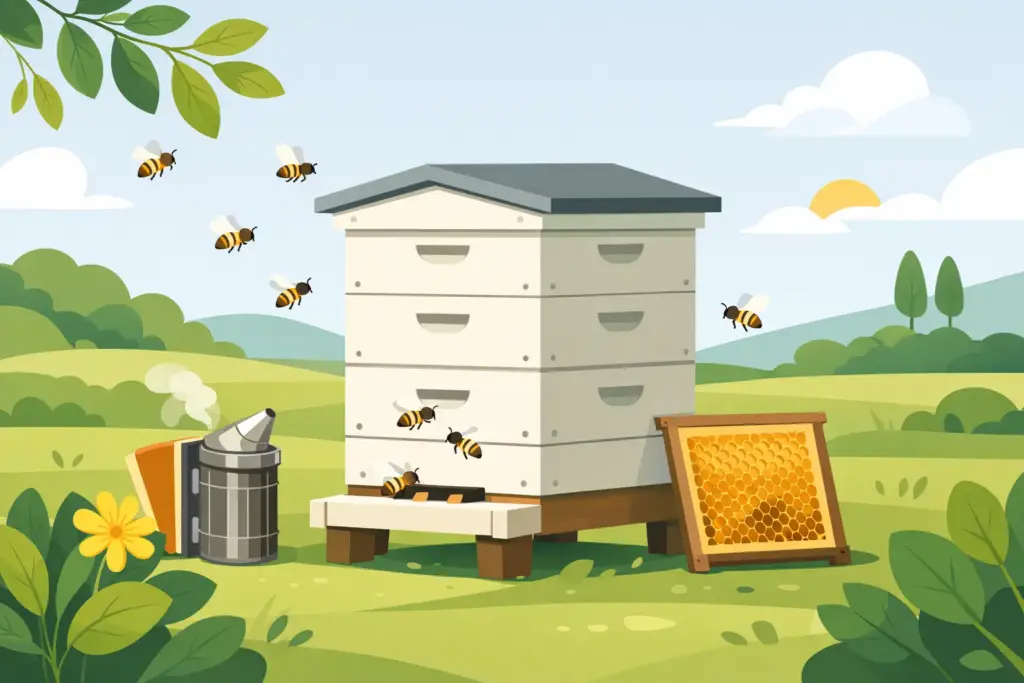
A first hive has to do more than look good in the backyard. It needs to fit the bees, the local weather, the equipment you will buy later, and the way you can realistically lift boxes. For most new beekeepers, the best beehive for beginners is a standard 10-frame Langstroth hive built from quality woodenware.
That recommendation is not about tradition for tradition’s sake. The 10-frame Langstroth is common because it is practical. Frames, feeders, replacement boxes, queen excluders, mite treatments, and extractors are built around it. If you start with this system, you can get help from nearby beekeepers and find compatible parts without turning every purchase into a research project.
Why a 10-Frame Langstroth Is the Best Beehive for Beginners
A Langstroth hive uses removable, hanging frames. That lets you inspect brood, look for the queen, assess food stores, make splits, replace damaged comb, and manage mites. Those are not optional jobs in modern beekeeping. A hive that makes them difficult can turn a promising colony into a frustrating one.
The standard 10-frame footprint is also the most forgiving size for a new beekeeper. It gives a colony room to build a solid brood nest and store enough honey for the long wet stretches we see in western Washington. Ten-frame boxes are stable, widely available, and easy to expand as your bees grow.
Just as important, standard equipment keeps your options open. If you later add another hive, buy a nuc, catch a swarm, or need a replacement box in a hurry, 10-frame Langstroth equipment is the local default. You will not be stuck searching for specialty parts during a nectar flow or right before winter.
A basic first hive is typically made up of a bottom board, an entrance reducer, two deep brood boxes with frames and foundation, an inner cover, and an outer telescoping cover. Add a feeder when needed, and plan to have at least one honey super ready before a strong colony runs out of space.
Start With Two Deep Brood Boxes and Medium Honey Supers
For beginners in the Pacific Northwest, two 10-frame deep boxes are a dependable brood setup. The lower deep gives the queen room to lay, while the upper deep provides space for expanding brood and food stores. By fall, a healthy colony can organize its winter cluster and honey reserves across both boxes.
Deep boxes are heavy when full. A 10-frame deep packed with honey can weigh 80 pounds or more. That is why many beekeepers use deep boxes only for the brood chamber and choose medium boxes for honey supers. A full medium is still work, but it is far easier to lift, inspect, and harvest from.
There is another path if lifting is a serious concern: use all medium boxes. Every box and frame is interchangeable, which simplifies equipment. The trade-off is that the colony needs more boxes to make the same brood space, and management can feel less intuitive while you are learning. It is a good system, but for most first-time keepers, two deeps and medium supers make the learning curve simpler.
What About an 8-Frame Hive?
An 8-frame Langstroth is a legitimate choice, especially for someone who cannot safely handle a full 10-frame box. The boxes are narrower and lighter, which matters more than many new beekeepers realize. A hive that you can inspect safely and confidently is better than a larger hive you dread opening.
The downside is capacity and compatibility. Eight-frame equipment is less common than 10-frame equipment, so local supply can be more limited. The colony has less room in each box, meaning it may require expansion sooner during a strong spring flow. It is also easier to make a mistake when mixing components, since 8-frame and 10-frame parts do not interchange.
Choose an 8-frame hive when weight is the deciding factor. Otherwise, a 10-frame Langstroth offers more flexibility, more local support, and a little more margin for a colony building toward winter.
Wooden Hives Versus Insulated Hives
A well-built wooden Langstroth hive remains the straightforward first choice. It is familiar, repairable, and easy to modify as you learn. Quality woodenware with properly fitted joints, solid covers, and dependable frames will serve a backyard beekeeper for years. In the Pacific Northwest, the details matter: keep the hive off wet ground, make sure the lid sheds rain, and give the entrance some protection from prevailing weather.
Insulated hive systems deserve a look, particularly in colder or more exposed locations. Insulation can reduce temperature swings and may help colonies use stores more efficiently through cold weather. Systems such as HiveiQ can be appealing where winter moisture, wind, or prolonged cool conditions put extra pressure on a colony.
But insulation is not a substitute for management. A well-insulated hive still needs adequate food, effective varroa control, dry conditions, and enough ventilation to manage moisture. It may cost more upfront and can use system-specific components. For a beginner who wants standard equipment and easy interchangeability, wood is usually the simpler place to start. For a beekeeper committed to insulated equipment from the beginning, choose the complete system and avoid mixing parts that do not fit correctly.
Hives That Sound Easy but Create More Work
Top-bar hives, Warre hives, and other specialty designs can be enjoyable, but they are not usually the easiest route for a first colony in this area. Their advocates often value natural comb, lighter equipment, or a different style of beekeeping. Those are real benefits for the right person.
The issue is management. Many local nucs arrive on Langstroth deep frames. Many treatments, feeders, replacement frames, and extraction tools are designed for Langstroth equipment. With specialty hives, you may need to transfer bees from purchased frames, use less standardized methods, or adapt tools that were not made for your box.
New beekeepers already have enough to learn: how to read brood patterns, recognize swarm cells, feed appropriately, test for mites, and prepare a colony for winter. A common hive format removes unnecessary variables. Once you have a season or two under your belt, it is easier to decide whether a specialty hive fits your goals.
Buy the Hive That Matches How You Will Get Bees
Your bee source should influence your equipment choice. A five-frame nucleus colony is one of the best starts for a new beekeeper because it arrives with drawn comb, brood in several stages, food stores, and a laying queen. Most nucs are supplied on standard Langstroth frames, so a 10-frame deep hive lets you move those frames directly into their new home.
A three-pound package is more flexible because the bees begin by drawing comb from scratch. It can go into different hive types, but it will need more feeding and more time to build. In either case, have the hive assembled, painted or protected if needed, level, and placed before pickup day. Bees do not need you hunting for a missing frame while they are waiting in a package box.
Do not buy only the visible stack of boxes. Plan for the equipment that lets you care for the colony: a veil or suit, gloves if you prefer them, smoker, hive tool, feeder, extra frames, and a reliable method for monitoring and treating varroa mites. The hive is the house. Colony management is what keeps the house occupied.
Set Up for Bellingham and Pacific Northwest Weather
Place your hive where you can visit it easily. A quiet far corner of the property may seem ideal until you are carrying syrup, equipment, or a box of honey across wet grass. Morning sun is useful, afternoon shade can help during hot spells, and a windbreak is valuable in exposed sites. Keep the entrance clear of foot traffic and point it away from patios, doors, and neighboring yards when possible.
Elevation matters. Set the hive on a sturdy stand rather than directly on soil. This reduces moisture, makes inspections easier on your back, and keeps skunks and other pests from treating the entrance like an easy snack bar. A slight forward tilt helps rain drain away from the entrance instead of collecting inside.
Keep spare equipment close by. Colonies can fill a box quickly when blackberries and other local forage are coming on. Adding space before the bees feel crowded is far easier than trying to manage swarm preparations after queen cells appear.
The right first hive should make good beekeeping easier, not make you feel locked into a complicated system. Start with dependable 10-frame Langstroth equipment, buy it from people who understand local seasons, and give yourself room to learn. At Les’s Bees, that practical approach means helping new keepers choose equipment they can use now and continue using when their first colony becomes two.