

A 2011 study by Food Safety News found that 76% of honey sold in U.S. grocery stores contained no pollen. Without pollen, the honey is untraceable and stripped of many natural compounds. It’s no wonder people distrust mass-produced foods. You see the labels on the shelf, from “pure” to “natural,” but it’s hard to know what you’re actually buying for your family, especially when you’re looking for real health benefits.
We believe choosing honey shouldn’t be confusing. This guide is here to give you clear, direct answers. We’ll cover the real benefits of local raw honey and show you why it is a nutritional powerhouse, particularly for anyone dealing with seasonal allergies here in the Pacific Northwest. You will learn exactly what “raw” and “unfiltered” mean, how choosing local supports our Whatcom County ecosystem, and where you can find this liquid gold, guaranteed to be the real thing.
Key Takeaways
- Understand why ‘raw’ and ‘unfiltered’ are crucial labels that separate nutrient-rich honey from the processed sugar sold in most stores.
- Discover the real benefits of local raw honey, from its powerful antioxidants and digestive enzymes to its potential role in managing seasonal allergies.
- Learn a simple at-home test to confirm your honey is pure and identify the key signs of authenticity, like natural crystallization.
- Find out how choosing Whatcom County honey directly supports your health and the vital pollinators in our local ecosystem.
What is Raw Local Honey and Why Does the ‘Raw’ Matter?
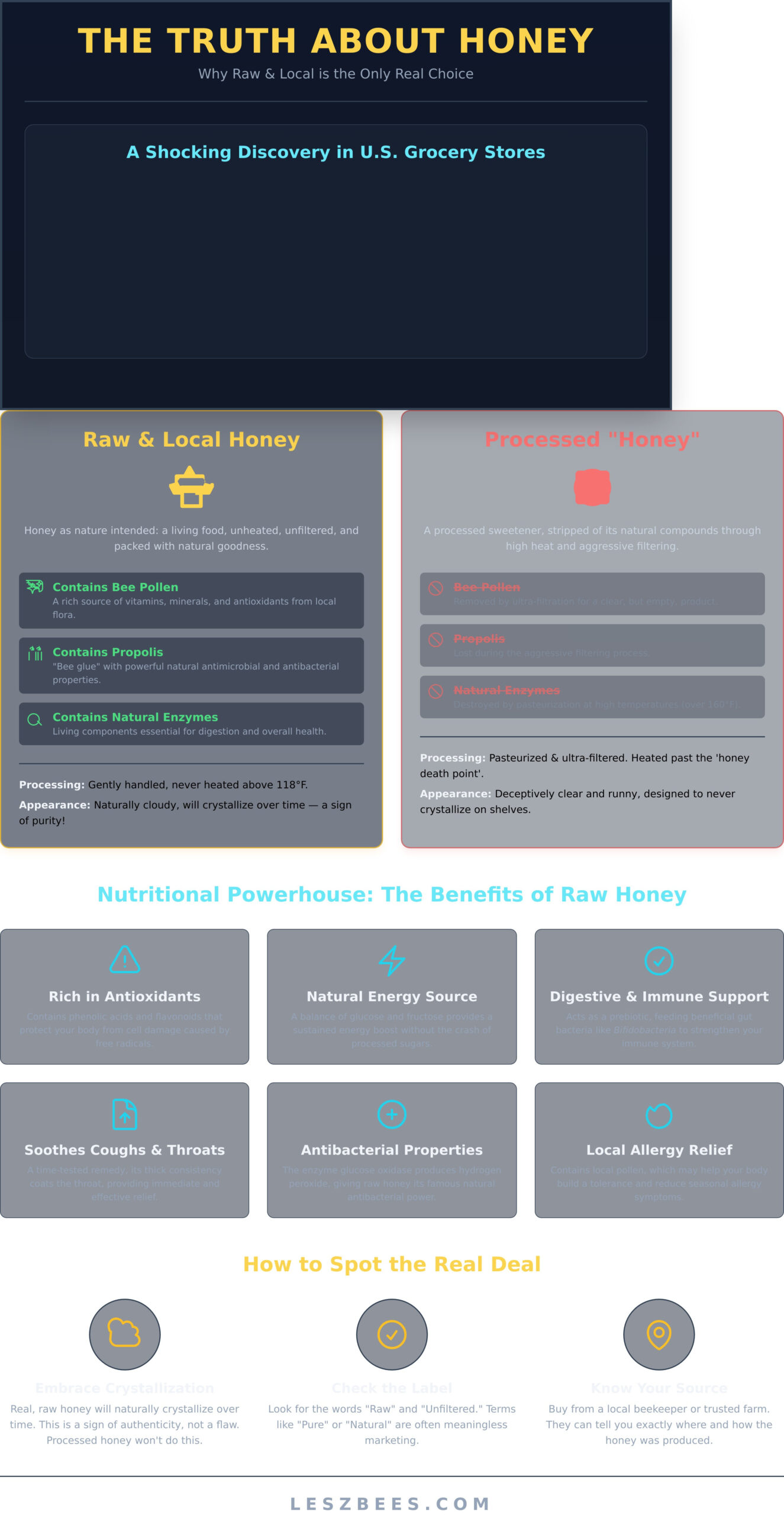
Most honey you find in a typical grocery store isn’t what you think it is. It’s a processed sweetener, not a natural food. True raw honey is different. It’s honey exactly as the bees made it: unheated, unfiltered, and unpasteurized. This is nature’s original liquid gold. To understand the basics of what is raw honey, you have to see it as a living food, packed with everything the bees put into it. The ‘local’ part is just as important. Honey from our hives here in Bellingham contains pollen from local plants, which is a world away from the generic pollen profile of honey trucked in from another state or country. When left in its natural state, honey is a genuine superfood, and understanding this difference is the first step to unlocking the true benefits of local raw honey.
Raw vs. Processed: The Heating Problem
Large commercial brands pasteurize their honey for two main reasons: to make it look clear and to keep it from crystallizing on the shelf. This process involves heating the honey to high temperatures, often over 160°F. While this extends shelf life, it effectively kills the honey. The vital, delicate nutrients can’t survive the heat. We call any temperature over 118°F the ‘honey death point,’ as this is where the beneficial enzymes and probiotics are destroyed. What’s left is little more than a sweet syrup, stripped of the very properties that make raw honey a healthy choice.
The Filtering Fallacy: What You Lose When It’s ‘Clear’
That perfectly clear, runny honey you see in plastic bears is a sign of heavy processing, not quality. To achieve that look, manufacturers use a process called ultra-filtration, which pushes the honey through microscopic filters. This process strips out the most valuable parts of the honey. When you choose heavily filtered honey, you lose:
- Bee Pollen: Tiny particles of local pollen that are a source of vitamins and antioxidants.
- Propolis: Also known as ‘bee glue,’ this is a resin bees create that has powerful natural antimicrobial and antibacterial properties.
- Natural Enzymes: These are the living components that make raw honey so unique and beneficial for your health.
Real, unfiltered honey is often cloudy and will crystallize over time. This isn’t a flaw. It’s proof that all the good stuff is still in the jar. The incredible health benefits of local raw honey come directly from these powerful, natural ingredients that are removed during commercial processing.
Nutritional Powerhouse: The Specific Health Benefits of Raw Honey
Most commercial honey is heavily processed. It’s pasteurized with high heat, which destroys many of its beneficial compounds. Raw honey is different. It’s a true functional food, left in its natural state straight from the hive. This means it contains a complex mix of nutrients that processed sweeteners simply don’t have.
At its core, raw honey is rich in powerful plant compounds and antioxidants. These include phenolic acids and flavonoids, which help protect your body from cell damage caused by free radicals. Beyond antioxidants, raw honey contains active natural enzymes like amylase and glucose oxidase. Amylase helps break down starches, while glucose oxidase produces hydrogen peroxide, giving honey its well-known antibacterial properties. This is why it has been used as a medicine for centuries. The specific phytonutrients found in raw honey come directly from the local flowers and plants the bees visited. This direct link to the local environment is one of the most important benefits of local raw honey.
A Natural Energy Source That Won’t Crash
Forget sugary sports drinks. Raw honey offers a superior energy boost without the crash. Its unique balance of natural sugars, primarily fructose and glucose, provides a two-stage energy release. The glucose is absorbed quickly for an immediate burst of energy, while the fructose is absorbed more slowly, providing sustained fuel. This makes it an excellent pre-workout choice. The trace minerals in raw honey, like potassium, also support proper metabolic function and hydration.
Digestive and Immune Support
Your gut health is foundational to your overall wellness. Raw honey acts as a prebiotic, containing oligosaccharides that feed the beneficial bacteria in your digestive system, such as Bifidobacteria and Lactobacilli. A healthy gut microbiome strengthens your immune system. These are just some of the extensive Nutritional Benefits of Raw Honey that science continues to explore. The unique properties of each batch depend on the local flora, which is why you can taste the difference in our quality, unfiltered honey.
Honey is also a reliable, time-tested remedy for coughs and sore throats. Its thick consistency coats the throat, providing immediate relief. A 2020 meta-analysis by researchers at Oxford University found that honey was more effective at improving symptoms of upper respiratory tract infections than common over-the-counter medicines. This simple, natural solution is a perfect example of why keeping raw honey in your pantry is always a good idea.
The Local Pollen Connection: Fighting PNW Seasonal Allergies
One of the most talked-about benefits of local raw honey is its potential to ease seasonal allergies. The idea is based on a concept similar to immunotherapy. By consuming honey that contains trace amounts of local pollen, you may gradually introduce these allergens to your system. Over time, your body can build a tolerance, potentially reducing the severity of your allergy symptoms when spring arrives in Bellingham.
This isn’t just a theory; it’s a practical approach to wellness rooted in your specific environment. While scientific studies show mixed results, many people find personal relief. The key is exposing your immune system to the exact pollens that cause you trouble. For a deeper look at the science and discussion around Local Honey for Seasonal Allergies, it’s clear the pollen must match the source of your allergies. That’s why honey from Arizona or California won’t help with the specific allergens found here in Whatcom County. Our bees interact with a unique floral landscape, including major local allergens like Alder, Maple, and the ubiquitous Blackberry that blooms from May through July.
How Bees Collect the ‘Cure’
Our bees are your neighbors. They forage for nectar and pollen within a 3 to 5-mile radius of their hive. As they travel from blossom to blossom, microscopic pollen grains from local trees, weeds, and flowers stick to their bodies and get mixed into the honey they produce. While the primary allergens like Alder are wind-pollinated, bees still come into contact with these pollens, transferring trace amounts into the final product. This direct collection process is why raw, unfiltered honey is essential; commercial processing often removes these vital pollen grains.
Timing Your Local Honey Intake
Consistency is the most important factor for success. Think of it as a daily wellness routine, not a quick fix. Taking a spoonful of local raw honey each day, starting at least 4 to 6 weeks before your allergy season begins, gives your body time to adapt. For spring allergies in Skagit and Whatcom counties, this means starting your honey regimen in January or February, well before the Alder and Maple bloom cycles peak in March. This proactive approach is a cornerstone of getting the full benefits of local raw honey for allergy support.
To prepare for the Pacific Northwest allergy season, follow these simple steps:
- Start Early: Begin daily honey intake in mid-winter for spring allergies.
- Be Consistent: A tablespoon a day is more effective than sporadic use.
- Stay Local: Ensure your honey is from a beekeeper in your immediate area to match the local pollen profile.
By choosing truly local honey, you are using a product that is a direct reflection of the Whatcom County environment. It’s a simple, natural way to connect with your local ecosystem and prepare your body for the changing seasons.
Practical Guide: How to Identify and Use Real Local Honey
Finding genuine local raw honey requires more than just picking a jar off the shelf. The market is filled with products that use misleading terms. To get the real health benefits, you need to know what you’re looking for. True quality starts with understanding the label.
Look for three key terms: ‘Raw,’ ‘Unfiltered,’ and ‘Local.’ ‘Raw’ means the honey was never heated above 95°F (35°C), the natural temperature of a beehive. This gentle handling preserves the delicate enzymes and nutrients. ‘Unfiltered’ signifies that the honey was only lightly strained to remove large bits of wax, leaving beneficial pollen and propolis intact. Commercial honey is often pressure-filtered through a 200-micron screen, removing all of these valuable components. ‘Local’ should mean the bees foraged within a 50-mile radius of where the honey is sold, ensuring it contains pollen from regional plants.
The Truth About Crystallization
Many people mistake crystallized honey for spoiled honey. It’s the opposite. Crystallization is a natural process and a sign of purity. Honey is a supersaturated solution of glucose and fructose. Over time, the glucose separates from the water and forms crystals. To return it to a liquid state, gently place the jar in a warm water bath, keeping the temperature below 100°F (38°C). Never microwave it. Honey high in glucose, like Clover, crystallizes quickly, while honey high in fructose, like Blackberry, can stay liquid for much longer.
Proper storage is simple: keep it in your pantry. You should never refrigerate honey. The cold temperature of a refrigerator, typically around 40°F (4°C), will accelerate the crystallization process. Store your honey in a sealed container at room temperature, ideally between 70-80°F (21-27°C), to keep it smooth and ready to use.
To maximize the benefits of local raw honey, you must protect its enzymes. Adding it to boiling water or using it in high-heat baking will destroy these beneficial compounds. Instead, let your tea or coffee cool to a drinkable temperature before stirring in honey. Drizzle it over finished oatmeal, yogurt, or warm toast. It’s also an excellent base for salad dressings and marinades that don’t require cooking.
Sourcing Locally in Bellingham
When you buy direct from a beekeeper, you get a guarantee of quality. At a farmer’s market, don’t be afraid to ask questions. A good beekeeper will be happy to answer them. This direct connection ensures you know exactly what you’re getting and supports our local ecosystem by funding crucial pollination services for Whatcom County farms and gardens.
- “Is your honey completely raw and unfiltered?”
- “Where exactly are your hives located?”
- “Do you heat your honey at any point during extraction?”
We take pride in our process and our product. Every jar we sell is guaranteed to be raw, unfiltered, and 100% local. Shop our quality honey and taste the difference.
Taste the Difference: Why Les’s Bees Honey is Bellingham’s Choice
You’ve read about the incredible health properties of raw honey. Now it’s time to taste the source. At Les’s Bees, our honey isn’t just a product on a shelf; it’s a direct reflection of my personal commitment to quality. I stand behind every single jar because I personally choose every product I sell. This isn’t a corporate slogan. It’s a simple fact. We believe the full benefits of local raw honey are only realized when the honey is pure, unprocessed, and handled with expert care from a beekeeper you can trust.
Our process is straightforward because the best things in nature usually are. We never heat our honey. We never filter it. Ever. Heating honey above hive temperature (around 95°F) destroys the beneficial enzymes and delicate vitamins that make it a powerhouse of nutrition. Commercial processing often heats honey to 160°F or more to make it easier to bottle and to prevent crystallization. We don’t do that. We also don’t fine-filter our honey, which would remove the nutrient-rich pollen and propolis particles. Our method ensures that what you get is honey exactly as the bees made it: a true “Nature’s Super Food,” direct from the hive to your jar.
Quality You Can Trust
My promise is simple: Satisfaction Guaranteed. If you’re not happy with our honey, I’ll make it right. This confidence comes from a process that preserves the unique flavor profile of the Pacific Northwest. Our bees forage on a diverse mix of local flora, from the early spring maple and fruit blossoms to the summer blackberry and fireweed. Each jar captures this distinct Bellingham terroir, a taste that simply cannot be replicated by mass-produced honey. Explore our current selection on the Raw Honey product page.
More Than Just Honey
A purchase from Les’s Bees does more than just stock your pantry. It strengthens the entire Bellingham beekeeping community. We’re passionate about helping others succeed in beekeeping. In 2023 alone, we supplied over 150 nucleus colonies (nucs) and countless sets of quality woodenware to new and experienced beekeepers across Whatcom County. We know that healthy bees create high-quality honey. By equipping our local community with the best bees and supplies, we elevate the standard for everyone and ensure a thriving pollinator population. Experience the result of a healthy, local bee community for yourself.
Shop Les’s Bees Raw Honey Now and taste the difference that commitment makes.
Taste the Difference: Bring Home Bellingham’s Liquid Gold
Choosing honey from the grocery store shelf means you’re missing out on what makes it a true superfood. The real benefits of local raw honey are found in its pure, untouched state. It’s a nutritional powerhouse, containing over 22 amino acids and nearly 30 bioactive plant compounds that are destroyed by commercial pasteurization. For Pacific Northwest residents, its unique profile of local pollen can help your body build a natural tolerance to seasonal allergens, offering relief that generic honey simply can’t.
You deserve honey that is genuine and effective. At Les’s Bees, every single jar is 100% unheated and unfiltered. That’s a promise of purity that I, Les, personally select and stand behind. Your satisfaction is guaranteed or you get your money back. It’s that simple.
Stop settling for less. Taste the difference of Bellingham’s finest raw honey – Shop Les’s Bees and discover the pure, powerful flavor you’ve been missing.
Frequently Asked Questions About Local Raw Honey
Is it safe to give raw honey to infants?
No, you should never give raw honey to an infant under 12 months of age. Their developing digestive systems cannot handle the potential presence of Clostridium botulinum spores. While harmless to adults and older children, these spores can cause a serious illness called infant botulism. The American Academy of Pediatrics strongly advises against it. Always consult your pediatrician before introducing new foods.
How can I tell if the honey I bought is actually raw?
True raw honey will crystallize over time. This is a completely natural process where the glucose separates from the water. Mass-produced honey is often heated to over 160°F to keep it liquid, but this heat destroys beneficial enzymes. Look for a thick, opaque texture rather than a perfectly clear, runny liquid. An “unfiltered” label is another good sign that you’re getting the real thing.
Does raw honey ever expire or go bad?
No, properly stored raw honey doesn’t expire. Its naturally low water content (under 18%) and high acidity make it an unsuitable environment for bacteria and other microorganisms to grow. Archaeologists have found honey in Egyptian tombs that was still perfectly preserved after 3,000 years. Your honey might crystallize or change color over time, but it remains safe and edible indefinitely.
Why is local honey more expensive than grocery store honey?
Local honey costs more because it’s a small-batch, craft product. We manage our hives carefully and never cut corners with pasteurization or ultra-filtering. This hands-on process has higher labor costs per jar compared to large commercial operations, which often manage thousands of hives and may blend honey from various sources. You’re paying for a pure product and supporting your local beekeeper.
Can I use raw honey in hot tea without losing the benefits?
Yes, but you need to pay attention to the temperature. The valuable enzymes and probiotics in raw honey begin to break down at temperatures above 118°F (48°C). Since a fresh cup of tea is often much hotter, around 175°F (80°C), it’s best to let it cool for 5-10 minutes. Then you can stir in your honey to enjoy both its great taste and its full health properties.
What makes Bellingham honey different from other Washington honey?
Bellingham honey gets its unique flavor from our specific local flora. Our bees forage on a distinct mix of plants, including wild blackberry, fireweed, and maple trees native to Whatcom County. This creates a complex, floral taste profile that is a direct reflection of our local ecosystem. It’s a different taste experience than honey from the apple orchards of the Yakima Valley or the forests of the Olympic Peninsula.
How much local honey should I take for allergies?
Many people find that one of the key benefits of local raw honey is seasonal allergy support. A common approach is to take one to two teaspoons daily. For best results, start this routine at least 4-6 weeks before your allergy season typically begins. The goal is to introduce small amounts of local pollen into your system, which may help your body build a natural tolerance over time.
Why does my raw honey look cloudy or have white foam on top?
Cloudiness and foam are excellent signs of authentic raw honey. The cloudiness is simply crystallization, a natural process that proves your honey hasn’t been overheated. The white foam on top is a mix of tiny air bubbles, pollen, and bits of beeswax that rise to the surface. Neither of these things impacts the quality or safety of your honey. You can simply stir them back in.